Studying at CBS means not only understanding economic concepts, but also applying them early in a real business environment. This was clearly demonstrated in a recent Business Project with the Hennecke Group.
Over several weeks, students worked on a strategic challenge from an internationally successful industrial company and presented their results directly to executives at the company’s headquarters near Bonn.
The project highlights how practice-oriented learning at CBS works: combining academic methods, interdisciplinary teamwork and direct collaboration with company stakeholders. Students are given the opportunity to step into roles that are often only experienced later in their careers.
This approach is a defining element of the NXT GEN study model, where theory-driven teaching is combined with practical input from business and society.
Key Takeaways
- Study format: Business programmes at CBS
- Company: Hennecke Group
- Project format: Five project teams, several weeks, direct collaboration with company stakeholders
- Focus topics: Sales approaches, reporting structures and optimisation strategies for sales processes
- Academic supervision: Prof. Dr. Ulrich Anders, Strategic Management
- Final presentation: Hennecke Group headquarters near Bonn, presented to company executives
- Practical relevance: The project demonstrates how real-world business experience is systematically integrated into CBS study programmes.
Practice-Oriented Learning: Working Like in a Consulting Project
Business Projects with external partners are an integral part of CBS programmes. Real business challenges are systematically integrated into teaching, enabling students to apply academic methods directly in a corporate context.
In this Business Project, students worked in agile teams on a real strategic challenge from the Hennecke Group. Over several weeks, they analysed existing processes and developed concrete recommendations for future optimisation.
Under the academic guidance of Prof. Dr. Ulrich Anders, Professor of Strategic Management, the teams were supported in building structured analyses and developing well-founded strategic solutions.
This is what makes these projects particularly valuable: students do not only gain knowledge, but learn how to apply it in a structured, solution-oriented way within the context of an international company.
The Assignment: Sales Strategies and Reporting in an International Context
The Hennecke Group is one of the world’s leading industrial companies in machinery and systems for processing polyurethane. This versatile material is used across a wide range of industries, including:
- automotive industry
- construction and insulation
- furniture production
- footwear industry
- cooling and insulation systems
Against this backdrop, students were tasked with analysing key sales processes and identifying optimisation potential.
The focus of the project included:
- analysis of existing sales approaches
- evaluation of current reporting structures
- development of optimisation strategies for future sales processes
Students developed practical and implementable recommendations while working closely with company representatives, creating a direct exchange between academic analysis and real business practice.
Final Presentation at the Hennecke Headquarters
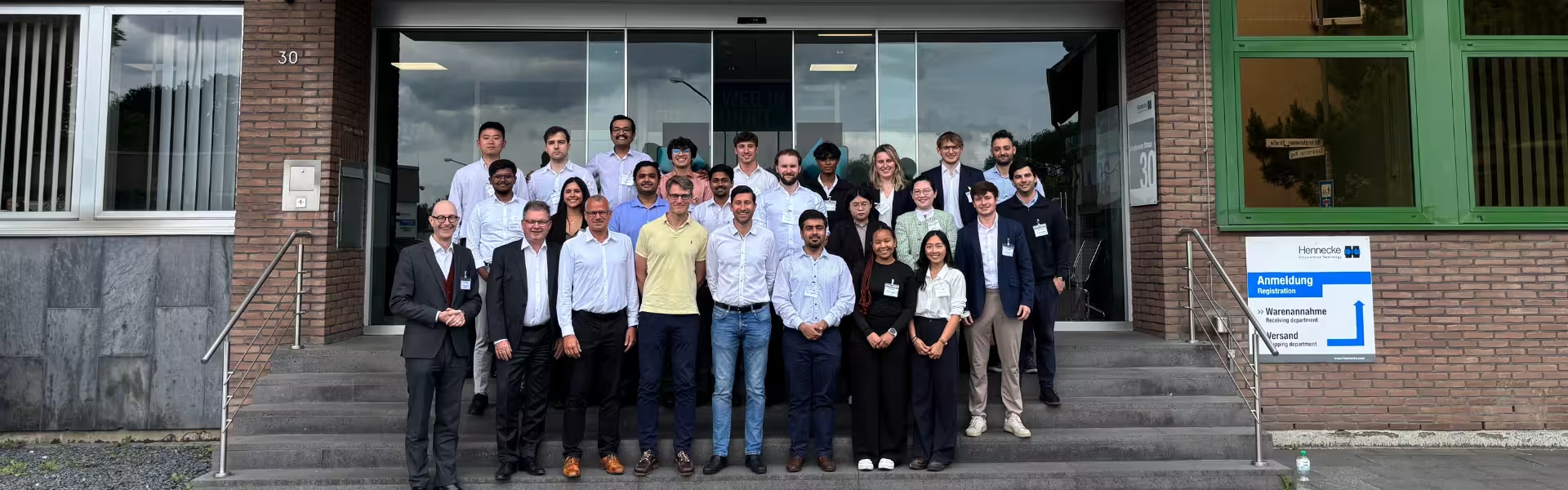
The highlight of the project was the final presentation at the Hennecke Group headquarters near Bonn.
Students presented their analyses and recommendations directly to company representatives, including executives from various departments.
This type of presentation creates a realistic consulting environment. Students defend their arguments, respond to questions and engage in strategic discussions at eye level, developing the ability to communicate ideas professionally and convincingly.
The feedback from the company clearly demonstrated the value of such collaborations. As Yves Souguenet, CFO of the Hennecke Group, stated:
The project generated great benefit to us and we will certainly integrate a number of very valuable suggestions into our own systems and approaches.
The international composition of the student teams also played an important role. As a global company, the Hennecke Group benefits from diverse perspectives and cultural insights.
Exclusive Insights into Real Business Processes
For students, the project was far more than a standard academic assignment. They experienced how strategic decisions are developed and discussed in an international industrial company.
The Business Project enabled them to:
- work on a real business challenge
- apply academic methods to practical problems
- develop strategic recommendations
- present results in a corporate environment
- engage directly with executives of a global company
These experiences strengthen not only technical knowledge but also key skills such as teamwork, presentation abilities and strategic thinking.
Real-World Business Experience Integrated into the Curriculum
The Business Project with the Hennecke Group is a strong example of the CBS study model. It shows how students can study in a practice-oriented way.
In CBS business programmes, the integration of real corporate practice is systematically embedded through:
- Business Projects addressing real strategic and operational challenges from partner companies
- Regular guest lectures by executives and industry experts
- Conventions providing space for interdisciplinary learning and practice-oriented leadership experiences
- Case studies and simulation games addressing typical business challenges
- Mandatory internships for applying academic knowledge in a corporate context
- Dual study formats with continuous integration into company structures
- A network of more than 1,300 partner companies across various industries
This structured integration enables students not only to analyse economic challenges, but also to develop well-founded decisions under real market conditions.
Those who choose to study at CBS benefit not only from a strong academic foundation, but also gain early confidence in professional environments – within teams, within organisations, and in front of decision-makers.
With projects like this, CBS reinforces its commitment to closely linking business and academia and preparing students specifically for leadership roles in a globalized and sustainability-oriented economy.
Studying at CBS means not only understanding economic concepts, but also applying them early in a real business environment. This was clearly demonstrated in a recent Business Project with the Hennecke Group.
Over several weeks, students worked on a strategic challenge from an internationally successful industrial company and presented their results directly to executives at the company’s headquarters near Bonn.
The project highlights how practice-oriented learning at CBS works: combining academic methods, interdisciplinary teamwork and direct collaboration with company stakeholders. Students are given the opportunity to step into roles that are often only experienced later in their careers.
This approach is a defining element of the NXT GEN study model, where theory-driven teaching is combined with practical input from business and society.
Key Takeaways
- Study format: Business programmes at CBS
- Company: Hennecke Group
- Project format: Five project teams, several weeks, direct collaboration with company stakeholders
- Focus topics: Sales approaches, reporting structures and optimisation strategies for sales processes
- Academic supervision: Prof. Dr. Ulrich Anders, Strategic Management
- Final presentation: Hennecke Group headquarters near Bonn, presented to company executives
- Practical relevance: The project demonstrates how real-world business experience is systematically integrated into CBS study programmes.
Practice-Oriented Learning: Working Like in a Consulting Project
Business Projects with external partners are an integral part of CBS programmes. Real business challenges are systematically integrated into teaching, enabling students to apply academic methods directly in a corporate context.
In this Business Project, students worked in agile teams on a real strategic challenge from the Hennecke Group. Over several weeks, they analysed existing processes and developed concrete recommendations for future optimisation.
Under the academic guidance of Prof. Dr. Ulrich Anders, Professor of Strategic Management, the teams were supported in building structured analyses and developing well-founded strategic solutions.
This is what makes these projects particularly valuable: students do not only gain knowledge, but learn how to apply it in a structured, solution-oriented way within the context of an international company.
The Assignment: Sales Strategies and Reporting in an International Context
The Hennecke Group is one of the world’s leading industrial companies in machinery and systems for processing polyurethane. This versatile material is used across a wide range of industries, including:
- automotive industry
- construction and insulation
- furniture production
- footwear industry
- cooling and insulation systems
Against this backdrop, students were tasked with analysing key sales processes and identifying optimisation potential.
The focus of the project included:
- analysis of existing sales approaches
- evaluation of current reporting structures
- development of optimisation strategies for future sales processes
Students developed practical and implementable recommendations while working closely with company representatives, creating a direct exchange between academic analysis and real business practice.
Final Presentation at the Hennecke Headquarters
The highlight of the project was the final presentation at the Hennecke Group headquarters near Bonn.
Students presented their analyses and recommendations directly to company representatives, including executives from various departments.
This type of presentation creates a realistic consulting environment. Students defend their arguments, respond to questions and engage in strategic discussions at eye level, developing the ability to communicate ideas professionally and convincingly.
The feedback from the company clearly demonstrated the value of such collaborations. As Yves Souguenet, CFO of the Hennecke Group, stated:
The project generated great benefit to us and we will certainly integrate a number of very valuable suggestions into our own systems and approaches.
The international composition of the student teams also played an important role. As a global company, the Hennecke Group benefits from diverse perspectives and cultural insights.
Exclusive Insights into Real Business Processes
For students, the project was far more than a standard academic assignment. They experienced how strategic decisions are developed and discussed in an international industrial company.
The Business Project enabled them to:
- work on a real business challenge
- apply academic methods to practical problems
- develop strategic recommendations
- present results in a corporate environment
- engage directly with executives of a global company
These experiences strengthen not only technical knowledge but also key skills such as teamwork, presentation abilities and strategic thinking.
Real-World Business Experience Integrated into the Curriculum
The Business Project with the Hennecke Group is a strong example of the CBS study model. It shows how students can study in a practice-oriented way.
In CBS business programmes, the integration of real corporate practice is systematically embedded through:
- Business Projects addressing real strategic and operational challenges from partner companies
- Regular guest lectures by executives and industry experts
- Conventions providing space for interdisciplinary learning and practice-oriented leadership experiences
- Case studies and simulation games addressing typical business challenges
- Mandatory internships for applying academic knowledge in a corporate context
- Dual study formats with continuous integration into company structures
- A network of more than 1,300 partner companies across various industries
This structured integration enables students not only to analyse economic challenges, but also to develop well-founded decisions under real market conditions.
Those who choose to study at CBS benefit not only from a strong academic foundation, but also gain early confidence in professional environments – within teams, within organisations, and in front of decision-makers.
With projects like this, CBS reinforces its commitment to closely linking business and academia and preparing students specifically for leadership roles in a globalized and sustainability-oriented economy.