Practice-oriented learning at cBS
Business projects, corporate partnerships and application-based teaching formats allow students to learn in real-world business environments.

WHY PRACTICAL EXPERIENCE IS A CORE PART OF STUDYING AT CBS
At CBS, practice-oriented learning is not an optional add-on to your studies.
It is systematically integrated into our study programmes and embedded in the curriculum from the beginning.
Practical formats such as projects with companies, internships and guest lectures from industry experts ar part of the programme and designed to apply academic knowledge directly to real business situations.
This creates a continuous connection between academic learning and real-world business practice.
As a result, CBS positions itself as a practice-oriented university, where academic knowledge is consistently combined with real challenges from companies.

Practice-oriented learning at CBS: shaping your future

Practical Study Phases
Intensive practical phases within dual or part-time study programmes.

Corporate Network
More than 1,300 partner companies from a wide range of industries.

Learn from Leading Experts
Experts from national and international companies.

Business Projects
Real strategic and operational challenges from partner companies.

Guest Lectures
Regular insights from industry leaders and business experts.

Conventions
Interdisciplinary learning and practice-oriented leadership experiences.

Case Studies & Simulations
Analysis of real business situations and simulation games.

Mandatory Internship
Application of academic knowledge in real company environments.
OUR PRACTICE FORMATS: How you gain practical experience during your studies
Practical experience is a core part of studying at CBS. Through different formats, students gain early experience in real business environments, build their professional networks and apply their knowledge directly.
The following formats show how practical experience is integrated into the study programmes.




Industry Experience Integrated into the NXT GEN and NEW ERA Study Concept
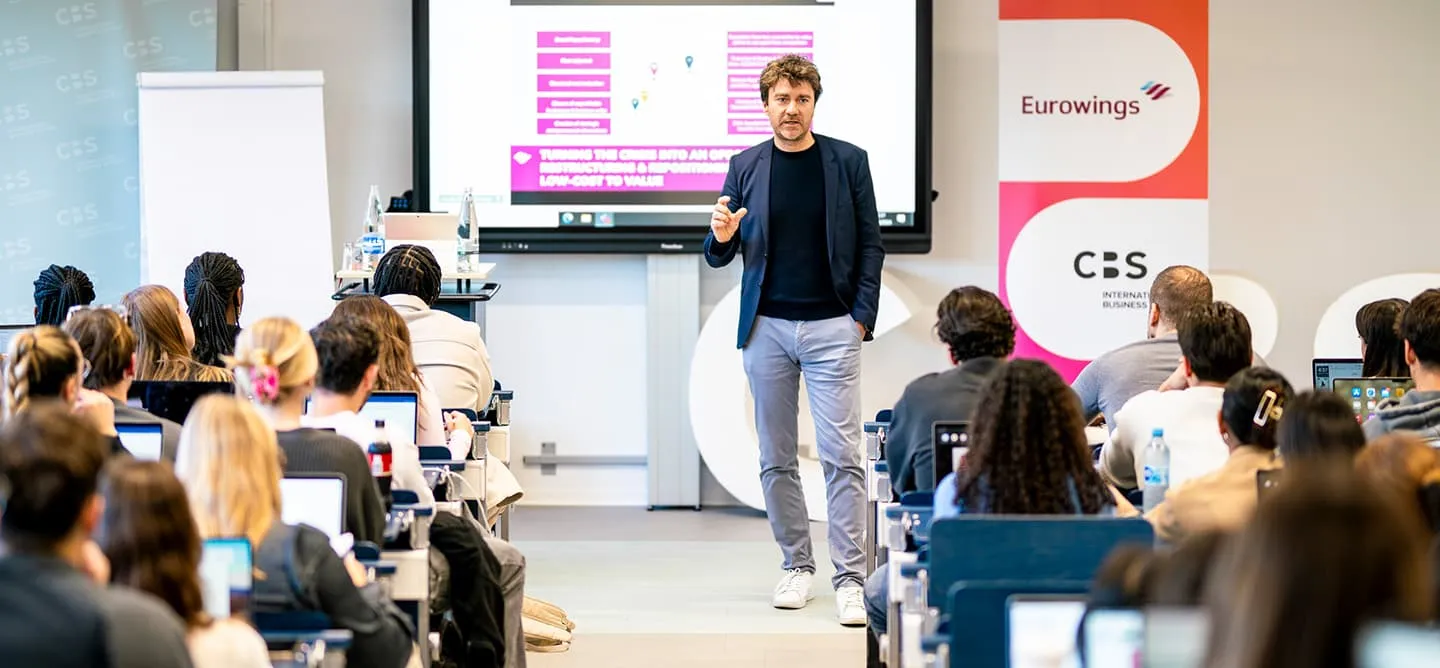
At CBS, practical industry experience is not limited to individual modules, but is part of a comprehensive study concept. In the NXT GEN Bachelor programmes and the NEW ERA Master programmes, academic knowledge is consistently connected with real challenges from companies.
Students work on business projects during their studies, analyse real market and company situations and present their results to industry experts. At the same time, they develop future skills such as analytical thinking, problem-solving abilities, teamwork and digital competencies.
This enables students to gain practical experience during their studies, build professional networks and develop skills that are highly valued in the job market.
Industry Partnerships: Over 1,300 Partner Companies
CBS collaborates with a strong network of more than 1,300 partner companies. These include international corporations as well as innovative medium-sized businesses and start-ups from industries such as consulting, manufacturing, retail, finance, technology, media, healthcare and non-profit organisations.
Through this close collaboration, students gain early insights into real business practice, for example through business projects, guest lectures, workshops, internships and direct exchange with industry professionals.
This creates a study experience that consistently connects academic learning with real-world business practice.



Practical Experience that Opens Career Doors
Business projects help students enter the job market more easily, as they gain hands-on experience and build connections with companies during their studies. When students collaborate with organisations on real business challenges, they do not only develop solutions but also build valuable professional relationships.
Internships deepen these insights and often open the door to direct employment after graduation. Many students later use these contacts to secure working student positions, additional internships or their first full-time job.
In dual study programmes, the transition is even smoother, as many students are hired directly by their partner company after completing their studies.
Presenting project results to company representatives or advisory boards also allows students to demonstrate their expertise and begin building a professional network early in their careers.
FAQ: Frequently Asked Questions about Practice-Oriented Learning
What does practice-oriented learning mean?
What are the career advantages of a practice-oriented programme?
How can you recognise whether a programme is truly practice-oriented?
Any Questions?
Do you have questions about our Bachelor’s or Master’s degree programmes? Simply book your personal consultation appointment now – either online or on-site! Our team offers individual support without obligation to help you find the right degree programme.