How can you recognise a practice-oriented degree programme?

10
.
03
.
2026
0
Min. reading time
Category |
Studies
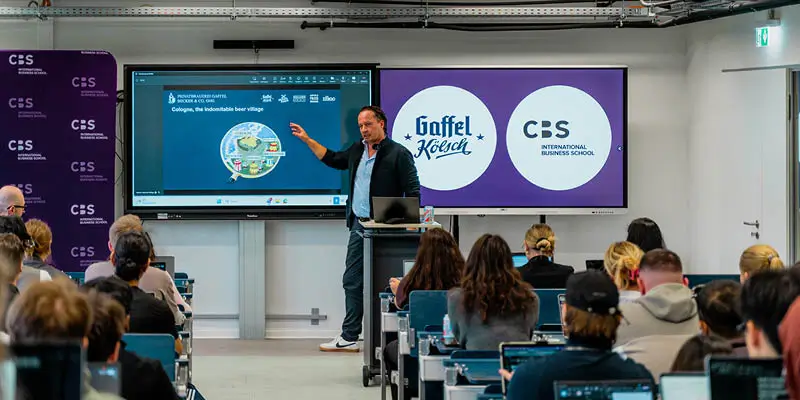
Students working together on a practical project during their studies

Do you want to study, but not just learn theory?
Do you want to deliver projects, solve real problems, and take on responsibility early?
Do you want to understand how business really works?

Then you are right to ask:

How can you recognise a practice-oriented degree programme?

Many higher education institutions use terms such as “practice-oriented” or “application-based”. But real practice is not something you recognise through marketing claims. You recognise it through clear and verifiable criteria.

In this guide, you will learn step by step:

  • which features really define a practice-oriented degree programme
  • how to compare degree programmes objectively
  • how to distinguish marketing language from real structure
  • how practice is systematically integrated at CBS

Key Takeaways

  • Practice structurally integrated: A practice-oriented degree program is embedded in the curriculum and not an optional add-on.
  • Real company projects: Projects with real business partners are one of the most important quality indicators of a practice-oriented study program.
  • Practical phases during studies: Mandatory internships or dual study formats increase practical experience and allow direct application of what you learn.
  • Simulations and case studies: Case studies and simulation games help students understand real business decision-making processes.
  • Professional tools and methods: A practice-oriented degree teaches tools, techniques, and methods that are used later in professional environments.
  • Strong corporate network: Partnerships with companies provide access to projects, internships, and valuable professional contacts.
  • Better career prospects: Practical experience makes it easier to enter the job market and strengthens long-term career opportunities.

What does “practice-oriented degree” really mean?

Practice-oriented degree means that theory and real-world application are systematically connected. And not just through an internship at the end of your studies or a single guest lecture.

Instead, it means a study structure in which you regularly:

  • work with real company data
  • analyse strategic questions
  • complete projects in teams
  • give presentations in a corporate context
  • receive feedback from business partners

Practice therefore becomes part of your skills development.

At CBS, practice is not an add-on. It is a fixed part of the module structure across all degree programmes.

University or University of Applied Sciences: which is more practice-oriented?

Many prospective students ask: is a university or a university of applied sciences more practice-oriented?

Criterion University University of Applied Sciences
Focus Research Application
Teaching approach More theory-oriented More project- and practice-oriented
Company integration Often lower Traditionally higher
Practical semester Rarely mandatory Often integrated into the study program

As a general rule, what matters is not only the type of institution, but also the specific design of the degree programme.

{{call-to-action}}

The 12 criteria for a truly practice-oriented degree programme

Many institutions talk about practical relevance. But what does that actually mean? You can recognise a practice-oriented degree programme through clear and verifiable indicators. The following criteria help you compare programmes objectively and distinguish real structure from marketing language.

1. Project work with real business partners

A key feature of practice-oriented degree programmes is collaboration with real companies or organisations. Students should not only work on theoretical case studies, but on real assignments that are actually relevant to companies.

A strong practical focus is especially visible when:

  • companies are named explicitly
  • projects last several weeks or months
  • results are presented in a corporate context

At CBS, practice projects and Business Projects are firmly embedded in the module plan. Students analyse real market and company data and often present their solutions directly to decision-makers.

2. Mandatory internship or practical semester

A genuine practical semester or mandatory internship should be firmly embedded in the course of study. This is not about a voluntary internship on the side, but about a structured practical phase.

Look out for:

  • ECTS credits being awarded
  • academic supervision
  • reflection reports or practical projects being included

At CBS, mandatory internships are firmly integrated into many programmes and form part of students’ skills development. In some degree programmes, they can even replace the practice partner and give students broader insight into different organisations and companies.

3. Continuous practical integration

Practical relevance does not mean that a project happens only once during the entire course of study. What matters is whether practice is integrated across several semesters.

A practice-integrated programme is characterised by:

  • several project phases
  • regular involvement of external partners
  • repeated application of theory

At CBS, practice is structurally integrated and accompanies students through several stages of their studies.

4. Dual study option

A dual study programme permanently connects academic study with corporate practice. Students gain continuous work experience and apply their knowledge immediately.

Ask yourself:

  • Is there a clearly structured integration with a company?
  • Is the cooperation between the institution and the company organised in a structured way?

At CBS, you can study in a practice-oriented way through full-time, dual, or part-time alongside work formats, depending on your goals and life situation.

5. Strong and transparent network

Practice needs partners. A large network of companies and organisations increases the likelihood of high-quality projects, internships, and career opportunities.

Important questions are:

  • Are partner companies named publicly?
  • Are there concrete examples of cooperation?

CBS works with around 1,300 partner companies across different sectors. This network forms the basis for projects, practical phases, and career opportunities. CBS partner companies include Amazon, IBM, Vodafone, Rewe Group and UPS.

6. Practice-oriented assessment formats

Practical relevance is also reflected in the type of assessments. If programmes rely only on written exams, the link to application is often limited.

Practice-oriented assessments may include:

  • project work
  • presentations
  • case studies
  • business simulation games

These formats develop not only specialist knowledge, but also strategic thinking and communication skills.

{{call-to-action}}

7. Simulations and case studies

Simulations make it possible to work through complex decision-making situations in a realistic way. In particular, case studies are a central element in business-related programmes. In part-time and dual study formats, practice-based transfer assignments complement this approach: students take real challenges from their companies, analyse causes, and apply solutions directly in their day-to-day work.

In this way, they connect theory and application directly. They analyse real market situations, develop strategies, and make decisions under pressure. Business simulation games strengthen entrepreneurial thinking and prepare students for real leadership responsibility.

8. Professional tools

Practical relevance is also reflected in the use of professional tools. This can include:

  • marketing analytics tools
  • finance software
  • data analysis programmes
  • HR systems
  • logistics tools

Ask yourself: are you learning with the same instruments that are actually used in companies? The more concrete the connection to tools, the higher the practical relevance.

9. Systematic development of key skills

Practical relevance is also reflected in the development of transferable skills. These include independence, teamwork, a sense of responsibility, and analytical thinking.

A practice-oriented programme especially strengthens:

  • presentation skills
  • problem-solving skills
  • structured working methods
  • academic analytical ability

These skills are essential for leadership roles across different sectors.

10. Practice-oriented teaching

Does theory remain abstract, or is it explained through current examples?

Practice-oriented teaching means that content is embedded again and again in real contexts. Strategic decisions, market developments, and digital transformation are not only explained in theory, but also applied and discussed.

This is exactly where the CBS study models NXT GEN at Bachelor’s level and NEW ERA at Master’s level come in. Formats such as Guest Lectures, workshops with industry experts, Real Business Projects, and other practice-oriented teaching formats are a fixed part of the learning experience because they connect academic foundations with application-oriented perspectives from business and society. In this way, students are systematically prepared throughout all phases of their studies to deal with complex entrepreneurial and social challenges in a reflective, responsible, and future-oriented way.

11. Industry professionals and guest lecturers

Many of our lecturers come directly from professional practice or work in the field alongside teaching, in companies, healthcare, and social and educational institutions. Together with external experts, they bring current perspectives and first-hand experience into teaching.

Guest lectures provide insight into:

  • corporate management
  • transformation processes
  • innovation strategies

At CBS, guest lectures complement the structural integration of practice in a systematic way. As a result, students continuously benefit from new professionals and impulses, with lectures that address trends, challenges, and solutions from current professional practice.

12. Visible career outcomes

In the end, practical relevance is also reflected in how successfully graduates enter professional life. Do projects lead to working student roles or internships? Are there job offers after a dual study programme?

Typical career effects of practice-oriented degree programmes include:

  • early professional experience
  • better access to networks
  • faster transition into employment

Practical relevance therefore becomes the foundation for long-term career development.

Comparison: theory-oriented vs practice-integrated

Criterion University University of Applied Sciences
Focus Research Application
Teaching approach More theory-oriented More project- and practice-oriented
Corporate integration Often lower Traditionally higher
Practical semester Rarely mandatory Often integrated into the study programme

A practice-integrated degree programme prepares you more comprehensively for real-world challenges.

Evaluation matrix: how to compare degree programmes objectively

Give each criterion a score from 0 to 2 points.

Criterion 0 1 2
Real projects No Occasionally Regularly
Mandatory internship No Optional Integrated
Dual study option No Planned Available
Simulations No Occasional Fully integrated
Corporate network Unclear Mentioned Transparent

A total of 8 to 10 points indicates a strongly practice-integrated degree programme.

Tip: How to review the module handbook

Look specifically for terms such as:

  • Project module
  • Practical phase
  • Company cooperation
  • Business project
  • Simulation
  • Case study
  • Transfer assignment

If these terms are missing, practical integration is usually limited.

Is it all just marketing, or is there real structure?

Ask yourself the following questions:

  • Are concrete projects described?
  • Are partner companies named?
  • Is practical experience visible in the study plan?
  • Are there examples of career outcomes?

Real practice can be recognised in the details, not in slogans.

Real-world business experience systematically integrated into the curriculum at CBS

Practice at CBS is not an add-on. It is an integral part of the degree programmes.

  • A network of more than 1,300 partner companies across different industries
  • Practice projects and Business Projects with real strategic and operational challenges from partner companies
  • Mandatory internships for applying and deepening subject-specific competences in a corporate context
  • Case studies and simulation games to address typical real-world challenges
  • Transfer assignments and practice reflection for directly applying what has been learned and deepening understanding systematically
  • Dual study formats with continuous integration into company structures
  • Part-time programmes with direct application in students’ own companies or professional fields
  • Guest lectures by executives and industry experts on current topics
  • Conventions that create space for interdisciplinary learning and practical leadership experiences

Why practical relevance accelerates your career

Practice strengthens:

  • project responsibility
  • decision-making ability
  • strategic thinking
  • communication skills
  • market understanding

Companies are looking for graduates who are versatile and practice-oriented in their education.

Practical relevance therefore becomes a competitive advantage.

Frequently asked questions

What is a practice-oriented degree programme?

A degree programme in which real business practice is structurally integrated into the course of study.

Is a dual study programme more practice-oriented?

Yes, because study and corporate practice are continuously connected.

How can I recognise marketing claims?

Check module plans, the number of projects, mandatory internships, and concrete business partnerships.

What role does the corporate network play?

It enables projects, internships, working student roles, and makes it easier to enter professional life.

Conclusion: step by step to a practice-oriented degree programme

You can recognise a practice-oriented degree programme by clear criteria, not by slogans.

Practice has to be part of the structure.

At CBS, we combine versatile and practice-oriented degree programmes with a strong corporate network, flexible study formats, and individual career support.

That is how you move step by step towards success.

Do you want to study, but not just learn theory?
Do you want to deliver projects, solve real problems, and take on responsibility early?
Do you want to understand how business really works?

Then you are right to ask:

How can you recognise a practice-oriented degree programme?

Many higher education institutions use terms such as “practice-oriented” or “application-based”. But real practice is not something you recognise through marketing claims. You recognise it through clear and verifiable criteria.

In this guide, you will learn step by step:

  • which features really define a practice-oriented degree programme
  • how to compare degree programmes objectively
  • how to distinguish marketing language from real structure
  • how practice is systematically integrated at CBS

Key Takeaways

  • Practice structurally integrated: A practice-oriented degree program is embedded in the curriculum and not an optional add-on.
  • Real company projects: Projects with real business partners are one of the most important quality indicators of a practice-oriented study program.
  • Practical phases during studies: Mandatory internships or dual study formats increase practical experience and allow direct application of what you learn.
  • Simulations and case studies: Case studies and simulation games help students understand real business decision-making processes.
  • Professional tools and methods: A practice-oriented degree teaches tools, techniques, and methods that are used later in professional environments.
  • Strong corporate network: Partnerships with companies provide access to projects, internships, and valuable professional contacts.
  • Better career prospects: Practical experience makes it easier to enter the job market and strengthens long-term career opportunities.

What does “practice-oriented degree” really mean?

Practice-oriented degree means that theory and real-world application are systematically connected. And not just through an internship at the end of your studies or a single guest lecture.

Instead, it means a study structure in which you regularly:

  • work with real company data
  • analyse strategic questions
  • complete projects in teams
  • give presentations in a corporate context
  • receive feedback from business partners

Practice therefore becomes part of your skills development.

At CBS, practice is not an add-on. It is a fixed part of the module structure across all degree programmes.

University or University of Applied Sciences: which is more practice-oriented?

Many prospective students ask: is a university or a university of applied sciences more practice-oriented?

Criterion University University of Applied Sciences
Focus Research Application
Teaching approach More theory-oriented More project- and practice-oriented
Company integration Often lower Traditionally higher
Practical semester Rarely mandatory Often integrated into the study program

As a general rule, what matters is not only the type of institution, but also the specific design of the degree programme.

{{call-to-action}}

The 12 criteria for a truly practice-oriented degree programme

Many institutions talk about practical relevance. But what does that actually mean? You can recognise a practice-oriented degree programme through clear and verifiable indicators. The following criteria help you compare programmes objectively and distinguish real structure from marketing language.

1. Project work with real business partners

A key feature of practice-oriented degree programmes is collaboration with real companies or organisations. Students should not only work on theoretical case studies, but on real assignments that are actually relevant to companies.

A strong practical focus is especially visible when:

  • companies are named explicitly
  • projects last several weeks or months
  • results are presented in a corporate context

At CBS, practice projects and Business Projects are firmly embedded in the module plan. Students analyse real market and company data and often present their solutions directly to decision-makers.

2. Mandatory internship or practical semester

A genuine practical semester or mandatory internship should be firmly embedded in the course of study. This is not about a voluntary internship on the side, but about a structured practical phase.

Look out for:

  • ECTS credits being awarded
  • academic supervision
  • reflection reports or practical projects being included

At CBS, mandatory internships are firmly integrated into many programmes and form part of students’ skills development. In some degree programmes, they can even replace the practice partner and give students broader insight into different organisations and companies.

3. Continuous practical integration

Practical relevance does not mean that a project happens only once during the entire course of study. What matters is whether practice is integrated across several semesters.

A practice-integrated programme is characterised by:

  • several project phases
  • regular involvement of external partners
  • repeated application of theory

At CBS, practice is structurally integrated and accompanies students through several stages of their studies.

4. Dual study option

A dual study programme permanently connects academic study with corporate practice. Students gain continuous work experience and apply their knowledge immediately.

Ask yourself:

  • Is there a clearly structured integration with a company?
  • Is the cooperation between the institution and the company organised in a structured way?

At CBS, you can study in a practice-oriented way through full-time, dual, or part-time alongside work formats, depending on your goals and life situation.

5. Strong and transparent network

Practice needs partners. A large network of companies and organisations increases the likelihood of high-quality projects, internships, and career opportunities.

Important questions are:

  • Are partner companies named publicly?
  • Are there concrete examples of cooperation?

CBS works with around 1,300 partner companies across different sectors. This network forms the basis for projects, practical phases, and career opportunities. CBS partner companies include Amazon, IBM, Vodafone, Rewe Group and UPS.

6. Practice-oriented assessment formats

Practical relevance is also reflected in the type of assessments. If programmes rely only on written exams, the link to application is often limited.

Practice-oriented assessments may include:

  • project work
  • presentations
  • case studies
  • business simulation games

These formats develop not only specialist knowledge, but also strategic thinking and communication skills.

{{call-to-action}}

7. Simulations and case studies

Simulations make it possible to work through complex decision-making situations in a realistic way. In particular, case studies are a central element in business-related programmes. In part-time and dual study formats, practice-based transfer assignments complement this approach: students take real challenges from their companies, analyse causes, and apply solutions directly in their day-to-day work.

In this way, they connect theory and application directly. They analyse real market situations, develop strategies, and make decisions under pressure. Business simulation games strengthen entrepreneurial thinking and prepare students for real leadership responsibility.

8. Professional tools

Practical relevance is also reflected in the use of professional tools. This can include:

  • marketing analytics tools
  • finance software
  • data analysis programmes
  • HR systems
  • logistics tools

Ask yourself: are you learning with the same instruments that are actually used in companies? The more concrete the connection to tools, the higher the practical relevance.

9. Systematic development of key skills

Practical relevance is also reflected in the development of transferable skills. These include independence, teamwork, a sense of responsibility, and analytical thinking.

A practice-oriented programme especially strengthens:

  • presentation skills
  • problem-solving skills
  • structured working methods
  • academic analytical ability

These skills are essential for leadership roles across different sectors.

10. Practice-oriented teaching

Does theory remain abstract, or is it explained through current examples?

Practice-oriented teaching means that content is embedded again and again in real contexts. Strategic decisions, market developments, and digital transformation are not only explained in theory, but also applied and discussed.

This is exactly where the CBS study models NXT GEN at Bachelor’s level and NEW ERA at Master’s level come in. Formats such as Guest Lectures, workshops with industry experts, Real Business Projects, and other practice-oriented teaching formats are a fixed part of the learning experience because they connect academic foundations with application-oriented perspectives from business and society. In this way, students are systematically prepared throughout all phases of their studies to deal with complex entrepreneurial and social challenges in a reflective, responsible, and future-oriented way.

11. Industry professionals and guest lecturers

Many of our lecturers come directly from professional practice or work in the field alongside teaching, in companies, healthcare, and social and educational institutions. Together with external experts, they bring current perspectives and first-hand experience into teaching.

Guest lectures provide insight into:

  • corporate management
  • transformation processes
  • innovation strategies

At CBS, guest lectures complement the structural integration of practice in a systematic way. As a result, students continuously benefit from new professionals and impulses, with lectures that address trends, challenges, and solutions from current professional practice.

12. Visible career outcomes

In the end, practical relevance is also reflected in how successfully graduates enter professional life. Do projects lead to working student roles or internships? Are there job offers after a dual study programme?

Typical career effects of practice-oriented degree programmes include:

  • early professional experience
  • better access to networks
  • faster transition into employment

Practical relevance therefore becomes the foundation for long-term career development.

Comparison: theory-oriented vs practice-integrated

Criterion University University of Applied Sciences
Focus Research Application
Teaching approach More theory-oriented More project- and practice-oriented
Corporate integration Often lower Traditionally higher
Practical semester Rarely mandatory Often integrated into the study programme

A practice-integrated degree programme prepares you more comprehensively for real-world challenges.

Evaluation matrix: how to compare degree programmes objectively

Give each criterion a score from 0 to 2 points.

Criterion 0 1 2
Real projects No Occasionally Regularly
Mandatory internship No Optional Integrated
Dual study option No Planned Available
Simulations No Occasional Fully integrated
Corporate network Unclear Mentioned Transparent

A total of 8 to 10 points indicates a strongly practice-integrated degree programme.

Tip: How to review the module handbook

Look specifically for terms such as:

  • Project module
  • Practical phase
  • Company cooperation
  • Business project
  • Simulation
  • Case study
  • Transfer assignment

If these terms are missing, practical integration is usually limited.

Is it all just marketing, or is there real structure?

Ask yourself the following questions:

  • Are concrete projects described?
  • Are partner companies named?
  • Is practical experience visible in the study plan?
  • Are there examples of career outcomes?

Real practice can be recognised in the details, not in slogans.

Real-world business experience systematically integrated into the curriculum at CBS

Practice at CBS is not an add-on. It is an integral part of the degree programmes.

  • A network of more than 1,300 partner companies across different industries
  • Practice projects and Business Projects with real strategic and operational challenges from partner companies
  • Mandatory internships for applying and deepening subject-specific competences in a corporate context
  • Case studies and simulation games to address typical real-world challenges
  • Transfer assignments and practice reflection for directly applying what has been learned and deepening understanding systematically
  • Dual study formats with continuous integration into company structures
  • Part-time programmes with direct application in students’ own companies or professional fields
  • Guest lectures by executives and industry experts on current topics
  • Conventions that create space for interdisciplinary learning and practical leadership experiences

Why practical relevance accelerates your career

Practice strengthens:

  • project responsibility
  • decision-making ability
  • strategic thinking
  • communication skills
  • market understanding

Companies are looking for graduates who are versatile and practice-oriented in their education.

Practical relevance therefore becomes a competitive advantage.

Frequently asked questions

What is a practice-oriented degree programme?

A degree programme in which real business practice is structurally integrated into the course of study.

Is a dual study programme more practice-oriented?

Yes, because study and corporate practice are continuously connected.

How can I recognise marketing claims?

Check module plans, the number of projects, mandatory internships, and concrete business partnerships.

What role does the corporate network play?

It enables projects, internships, working student roles, and makes it easier to enter professional life.

Conclusion: step by step to a practice-oriented degree programme

You can recognise a practice-oriented degree programme by clear criteria, not by slogans.

Practice has to be part of the structure.

At CBS, we combine versatile and practice-oriented degree programmes with a strong corporate network, flexible study formats, and individual career support.

That is how you move step by step towards success.

Start your practice-oriented degree

Are you looking for a degree programme where you can apply your knowledge directly and gain valuable practical experience? Discover CBS english-taught bachelor’s and master's programmes and find out which degree programme best matches your goals and strengths.

Discover our practice-oriented english-taught programmes

Find your practice-oriented degree

Do you want more than just theory and want to work on real projects with companies? Discover CBS english-taught practice-oriented bachelor’s and master's programmes and find the programme that matches your interests and career goals.

Discover our practice-oriented english-taught programme

Arrange a consultation
Send a WhatsApp
Send an email.
Call now!
Events