Guest Lecture by Bayer: Building the Digital Future of Product Supply

21
.
04
.
2026
0
Min. reading time
Category |
Guest Lectures
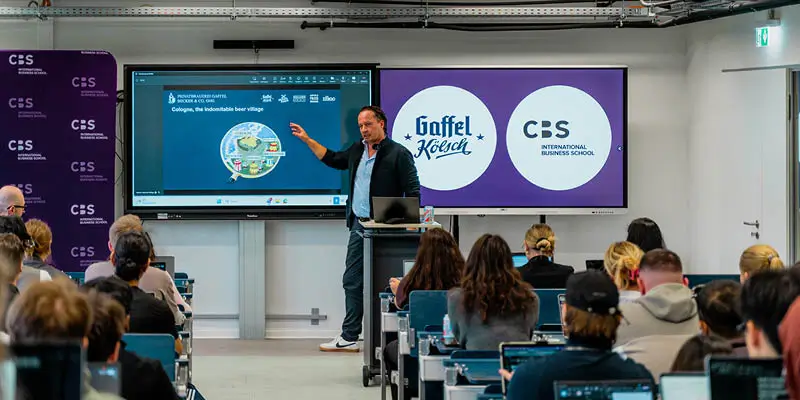
Dr. Jérôme Frutiger from Bayer AG gives a guest talk to students from the CBS University of Applied Sciences about the digital future of product supply

Key Takeaways

  • Format: Guest lecture as part of the CBS Guest Lecture Series
  • Speaker: Dr. Jérôme Frutiger
  • Position: EMEA Crop Protection & Biologics Digital Manufacturing Lead
  • Company: Bayer AG
  • Industry: Life Sciences / Agricultural Sciences / Digital Manufacturing
  • Topic focus: Digital transformation in product supply, AI & Smart Operations, Humanocracy and organisational agility
  • Practical example: Bayer's shift from siloed systems to a fully connected data ecosystem powered by agentic AI
  • Practice link: The lecture shows how real-world business perspectives are systematically integrated into CBS study programmes.

Where Digital Transformation Meets Global Agriculture

Real-world insights from industry are a central element of the study concept at CBS. Through the CBS Guest Lecture Series, executives and experts regularly share insights into current developments in business and markets.

As part of this series, Prof. Dr. Ulrich Anders from CBS welcomed Dr. Jérôme Frutiger, EMEA Crop Protection & Biologics Digital Manufacturing Lead at Bayer, to campus. His talk explored how Bayer is building the digital future of product supply — combining technology, data, and agricultural science to tackle some of the world's most pressing food challenges.

Bayer is one of the world's leading life sciences companies, with core competencies in health care and nutrition. Its Crop Science division combines seeds, crop protection, and digital farming tools to help farmers increase yields sustainably. Active in more than 100 countries, the company plays a pivotal role in addressing one of the defining questions of our time: how to feed a growing global population more efficiently and with fewer resources. For students of the CBS NXT GEN programme, this perspective offers direct relevance to careers in the digital economy.

Global Supply Chains as a Digital Challenge

Bayer's supply chain illustrates the sheer complexity of operating at global scale. From sourcing raw materials to delivering finished products to farmers, each step involves multiple systems, production sites, and logistics layers — all of which must perform reliably, efficiently, and in sync. Dr. Frutiger walked through how Bayer manages this challenge: by systematically connecting planning systems (ERP/SCM) with execution-level operations (MES, shop floor) across a diverse network of global sites.

Four strategic priorities sit at the heart of this effort: supply reliability, profitability across the full value chain, transformation of the global production network, and targeted growth — with particular emphasis on EMEA and Africa. These priorities reflect just how tightly economic performance and social responsibility are interwoven in this sector. Higher yields and smarter farming are not just business objectives — they are responses to a genuine global need.

AI as a Game Changer: From Data Silos to Smart Operations

A central theme of the lecture was the shift away from fragmented, siloed systems toward a fully connected data ecosystem. Rather than treating data as a by-product of operations, Bayer is building the infrastructure to turn it into a real-time decision-making asset — accessible across the organisation and actionable at every level.

Dr. Frutiger outlined a clear progression in how Bayer is deploying AI: starting from basic process automation, moving through advanced analytics, and evolving toward agentic AI — systems capable of making autonomous decisions and continuously improving processes without human intervention. Equally important is the democratisation of analytics: the goal is to ensure that every employee, not just data scientists, can access meaningful insights and act on them. The outcome Bayer calls "Smart Operations" translates to faster decisions, stronger performance, and a tangible competitive advantage in an industry where efficiency is everything.

{{call-to-action}}

Humanocracy: Putting People at the Centre of Digital Change

Technology alone does not drive transformation. That was one of the most memorable takeaways from Dr. Frutiger's lecture. Alongside its digital overhaul, Bayer is undergoing a profound organisational shift — inspired by the concept of Humanocracy: flatter structures, greater empowerment, and more entrepreneurial thinking at every level of the company.

The model of "Dynamic Shared Ownership" enables teams to take genuine responsibility, experiment faster, and develop a stronger sense of ownership over outcomes. As Dr. Frutiger made clear, the real drivers of innovation are culture and people — not technology. For students aspiring to careers in digital business, this is a crucial insight: the most transformative organisations succeed not just because of their tools, but because of the mindsets and leadership culture they cultivate.

Q&A: Career Advice for the Next Generation

The lecture was followed by a Q&A session in which Dr. Frutiger engaged directly with CBS students. When asked what advice he would give to those just starting out, his message was clear: start early and get hands-on experience — through internships, thesis projects, or trainee programmes embedded in real business environments.

His broader recommendation was to be proactive, explore genuine interests rather than simply following conventional paths, and seek out real-world exposure before graduation. Those who develop comfort with complexity and ambiguity early on, he suggested, are the ones best positioned to thrive in the fast-moving landscape of the digital economy.

Real-World Business Experience Embedded in the Curriculum

The guest lecture by Bayer exemplifies the concept of practice-oriented learning at CBS.

Across our business programmes, the integration of real-world business practice is systematically embedded through:

Business Projects with real strategic and operational challenges from partner companies

Regular Guest Lectures from executives and industry experts

Conventions providing space for interdisciplinary learning and hands-on leadership experience

Case Studies and Simulation Games to tackle typical business problems

Mandatory internships to apply academic knowledge in a corporate context

Dual study formats with continuous integration into business structures

A network of more than 1,300 partner companies across industries

This structured integration enables students not only to analyse business challenges analytically, but to develop well-founded decisions under real market conditions.

Anyone who chooses to study at CBS not only receives a scientifically grounded education but also gains the opportunity to build confidence in a professional environment at an early stage — working in teams, engaging with genuine decision-makers, and operating under real business conditions.

With events like this, CBS underlines its commitment to systematically embedding practice-oriented learning in its programmes and preparing students for leadership and expert roles in the digital economy.

Conclusion: Digital Future Needs Data, AI, and People

Dr. Jérôme Frutiger's lecture offered a compelling demonstration of how profoundly digital transformation is reshaping global agriculture and the supply chains behind it — and how the most effective transformations are those that combine technological ambition with genuine human empowerment.

The event offered students valuable insights into the realities of digital transformation at one of the world's leading life sciences companies, and a realistic picture of what it means to work at the intersection of data, AI, and global operations.

Key Takeaways

  • Format: Guest lecture as part of the CBS Guest Lecture Series
  • Speaker: Dr. Jérôme Frutiger
  • Position: EMEA Crop Protection & Biologics Digital Manufacturing Lead
  • Company: Bayer AG
  • Industry: Life Sciences / Agricultural Sciences / Digital Manufacturing
  • Topic focus: Digital transformation in product supply, AI & Smart Operations, Humanocracy and organisational agility
  • Practical example: Bayer's shift from siloed systems to a fully connected data ecosystem powered by agentic AI
  • Practice link: The lecture shows how real-world business perspectives are systematically integrated into CBS study programmes.

Where Digital Transformation Meets Global Agriculture

Real-world insights from industry are a central element of the study concept at CBS. Through the CBS Guest Lecture Series, executives and experts regularly share insights into current developments in business and markets.

As part of this series, Prof. Dr. Ulrich Anders from CBS welcomed Dr. Jérôme Frutiger, EMEA Crop Protection & Biologics Digital Manufacturing Lead at Bayer, to campus. His talk explored how Bayer is building the digital future of product supply — combining technology, data, and agricultural science to tackle some of the world's most pressing food challenges.

Bayer is one of the world's leading life sciences companies, with core competencies in health care and nutrition. Its Crop Science division combines seeds, crop protection, and digital farming tools to help farmers increase yields sustainably. Active in more than 100 countries, the company plays a pivotal role in addressing one of the defining questions of our time: how to feed a growing global population more efficiently and with fewer resources. For students of the CBS NXT GEN programme, this perspective offers direct relevance to careers in the digital economy.

Global Supply Chains as a Digital Challenge

Bayer's supply chain illustrates the sheer complexity of operating at global scale. From sourcing raw materials to delivering finished products to farmers, each step involves multiple systems, production sites, and logistics layers — all of which must perform reliably, efficiently, and in sync. Dr. Frutiger walked through how Bayer manages this challenge: by systematically connecting planning systems (ERP/SCM) with execution-level operations (MES, shop floor) across a diverse network of global sites.

Four strategic priorities sit at the heart of this effort: supply reliability, profitability across the full value chain, transformation of the global production network, and targeted growth — with particular emphasis on EMEA and Africa. These priorities reflect just how tightly economic performance and social responsibility are interwoven in this sector. Higher yields and smarter farming are not just business objectives — they are responses to a genuine global need.

AI as a Game Changer: From Data Silos to Smart Operations

A central theme of the lecture was the shift away from fragmented, siloed systems toward a fully connected data ecosystem. Rather than treating data as a by-product of operations, Bayer is building the infrastructure to turn it into a real-time decision-making asset — accessible across the organisation and actionable at every level.

Dr. Frutiger outlined a clear progression in how Bayer is deploying AI: starting from basic process automation, moving through advanced analytics, and evolving toward agentic AI — systems capable of making autonomous decisions and continuously improving processes without human intervention. Equally important is the democratisation of analytics: the goal is to ensure that every employee, not just data scientists, can access meaningful insights and act on them. The outcome Bayer calls "Smart Operations" translates to faster decisions, stronger performance, and a tangible competitive advantage in an industry where efficiency is everything.

{{call-to-action}}

Humanocracy: Putting People at the Centre of Digital Change

Technology alone does not drive transformation. That was one of the most memorable takeaways from Dr. Frutiger's lecture. Alongside its digital overhaul, Bayer is undergoing a profound organisational shift — inspired by the concept of Humanocracy: flatter structures, greater empowerment, and more entrepreneurial thinking at every level of the company.

The model of "Dynamic Shared Ownership" enables teams to take genuine responsibility, experiment faster, and develop a stronger sense of ownership over outcomes. As Dr. Frutiger made clear, the real drivers of innovation are culture and people — not technology. For students aspiring to careers in digital business, this is a crucial insight: the most transformative organisations succeed not just because of their tools, but because of the mindsets and leadership culture they cultivate.

Q&A: Career Advice for the Next Generation

The lecture was followed by a Q&A session in which Dr. Frutiger engaged directly with CBS students. When asked what advice he would give to those just starting out, his message was clear: start early and get hands-on experience — through internships, thesis projects, or trainee programmes embedded in real business environments.

His broader recommendation was to be proactive, explore genuine interests rather than simply following conventional paths, and seek out real-world exposure before graduation. Those who develop comfort with complexity and ambiguity early on, he suggested, are the ones best positioned to thrive in the fast-moving landscape of the digital economy.

Real-World Business Experience Embedded in the Curriculum

The guest lecture by Bayer exemplifies the concept of practice-oriented learning at CBS.

Across our business programmes, the integration of real-world business practice is systematically embedded through:

Business Projects with real strategic and operational challenges from partner companies

Regular Guest Lectures from executives and industry experts

Conventions providing space for interdisciplinary learning and hands-on leadership experience

Case Studies and Simulation Games to tackle typical business problems

Mandatory internships to apply academic knowledge in a corporate context

Dual study formats with continuous integration into business structures

A network of more than 1,300 partner companies across industries

This structured integration enables students not only to analyse business challenges analytically, but to develop well-founded decisions under real market conditions.

Anyone who chooses to study at CBS not only receives a scientifically grounded education but also gains the opportunity to build confidence in a professional environment at an early stage — working in teams, engaging with genuine decision-makers, and operating under real business conditions.

With events like this, CBS underlines its commitment to systematically embedding practice-oriented learning in its programmes and preparing students for leadership and expert roles in the digital economy.

Conclusion: Digital Future Needs Data, AI, and People

Dr. Jérôme Frutiger's lecture offered a compelling demonstration of how profoundly digital transformation is reshaping global agriculture and the supply chains behind it — and how the most effective transformations are those that combine technological ambition with genuine human empowerment.

The event offered students valuable insights into the realities of digital transformation at one of the world's leading life sciences companies, and a realistic picture of what it means to work at the intersection of data, AI, and global operations.

Real-world experience that makes the difference during your studies

Gain hands-on experience through real company projects during your Bachelor's or Master's degree and develop the skills that truly advance your career.

Start learning through real-world practice

Find your practice-oriented degree programme

Want to do more than just learn theory — tackle real projects and work with companies? Explore CBS's practice-oriented Bachelor's and Master's programmes and find the one that fits your interests and career goals.

Discover practice-oriented degree programmes

Arrange a consultation
Send a WhatsApp
Send an email.
Call now!
Events